
The Road to Happiness Starts with a Higher Purpose
From Glitter to Gita: Choosing the Subtler Way to Lasting Peace.

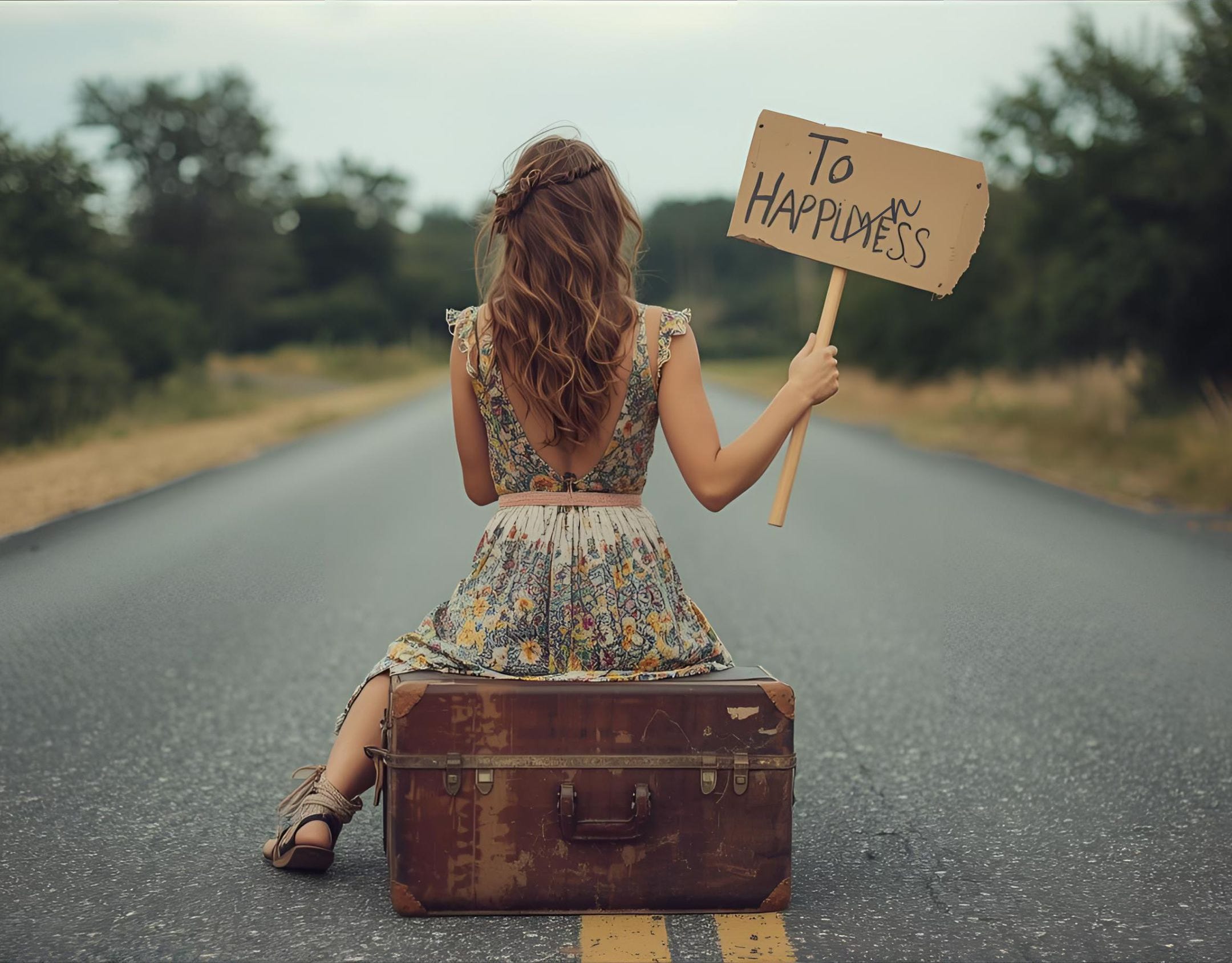
Dear Elder Sage,
In your previous essay, you mentioned that your highest purpose in life is to realise your original nature, which all sounds lovely, but how am I meant to achieve that when I’m so busy working a job, looking after my family, and feeling stressed most of the time?
Also, I’m not sure what my next move is. I feel stuck. I want to quit my current job, which I don’t enjoy but pays the bills, and pursue a career as an artist, which I love but doesn’t pay anything. All I know is that I just want to be happy. Please help.
Respectfully,
Olivia
Dear Olivia,
Let me start with something a wise man once told me when I was torn between pursuing a career in fashion design or dedicating myself to philosophy. He said, “Choose the subtler of the two.”
What he meant was, choose the higher, the nobler of the two — the one that takes you closer to who you truly are.
His words struck me with uncommon clarity, and I followed them. I chose philosophy. Not because it was easier, no. It was tougher, much tougher. There was no income. Everything was voluntary. I had to live in India for six years. Okay, that was my choice, but the Vedanta Academy was a spiritual boot camp — up at 4am every day for spiritual studies, two lectures a day, group discussions, vegan food, yoga and more study.1
Staying with fashion design would have been financially easier. But it would have ultimately destroyed my soul. I would have become increasingly further away from myself. However, as it was, I grew closer and closer to who I really am.
Many people choose the easier road — the one that feels pleasant or earns quick rewards. However, it’s always painful later on. The nobler, higher, more subtle route may seem tougher at first, but it leads to lasting peace. As the Bhagavad Gita states, “What is bitter in the beginning becomes nectar in the end. And what is like nectar in the beginning is poison in the end.”2
Looking back, it was the greatest decision I ever made because what is subtle endures. The subtle is who you are. It’s your nature. It’s who you are meant to be. You are not born to be stressed and unhappy; you were born to be free — to be peaceful, content, happy within, and not dependent on the world for your happiness.
You say you want to be happy. Knowing your purpose is the key to a happier and more fulfilling life. If you don’t know what your purpose is, then start questioning yourself. Find a quiet place where you won’t be interrupted. Answer one question at a time. Think deeply, and write the answers down.
What did you love to do as a child? If you can’t remember, then ask your family and relatives. They might be able to help.
What were you born to do? It could be anything — art, music, cooking, design, teaching, writing, sport, etcetera.
What is the one thing that makes you truly happy? Superficial answers won’t cut it. The truth lies deep within you.
What makes you feel like you are in your element?
What makes you come alive and feel great about yourself?
What makes you feel like you couldn’t be doing anything else?
Who inspires you? List the qualities that you admire in others. What you respect is what you already have. It’s just a matter of drawing them out of yourself.
What activities make you lose track of time?
If you were to teach something, what would it be?
Imagine yourself at 85, what would you regret not having done in your life?
Imagine you have only a few months to live. What would you do?
What would you like people to say about you when you’re gone?
Give yourself time; discovering your purpose won’t happen overnight. But when the penny drops, intelligently integrate what you love into your life. Work smartly. Be careful not to disrupt your life with rapid change. In other words, don’t go to work tomorrow and quit your job. Maintain your common sense.
“Work is love made visible. If you cannot work with love but only with distaste, then it is better that you leave your work and sit at the gate of the temple and take alms of those who work with joy.” — Kahlil Gibran
Fix what you love, in your case, art, as your goal. This gives you direction. Then treat your current work as a way to fund your freedom — a stepping stone to reach your goal. However, remember that being an artist in itself is not your ultimate aim. Your higher purpose is to dedicate your art to something greater than yourself.
When your creativity becomes an offering that inspires or brings joy to others, it transforms from a personal pursuit into a selfless act. That shift is what brings true peace, harmony, happiness — and ultimately, success.
So choose the subtler path, Olivia. Let a higher purpose guide your life. When every action is offered selflessly for the greater good of others, happiness is no longer something you chase; it blossoms naturally from within.
Hope this helps.
Be Well,
Meredith — The Elder Sage
If this benefits you, and you would like to give back by offering a donation, you can do so by subscribing or upgrading your free subscription.
‘Dear Elder Sage’ is a new opportunity for you to ask questions, like Olivia did, by sending a message. You can ask about anything related to spiritual development or any other topic of interest from any of the essays on this Substack.
Meredith, I love how Vedanta emphasizes that we all have a purpose in this material world. That's unlike the Buddhist tradition I've followed, which emphasizes retreat to the exclusion of everything else. Many people have the same question: how to integrate the practical realities of life with spiritual pursuits. You've beautifully mapped out the way forward with your pivotal questions.
I don't usually do this, but I had to.
Write a comment before finishing reading.
Happy<s> m</s>ness. Nice.
And now I come back to summarize: Worth reading!