

Who Is that Old Woman in the Mirror?
How to accept ageing and find freedom in invisibility.

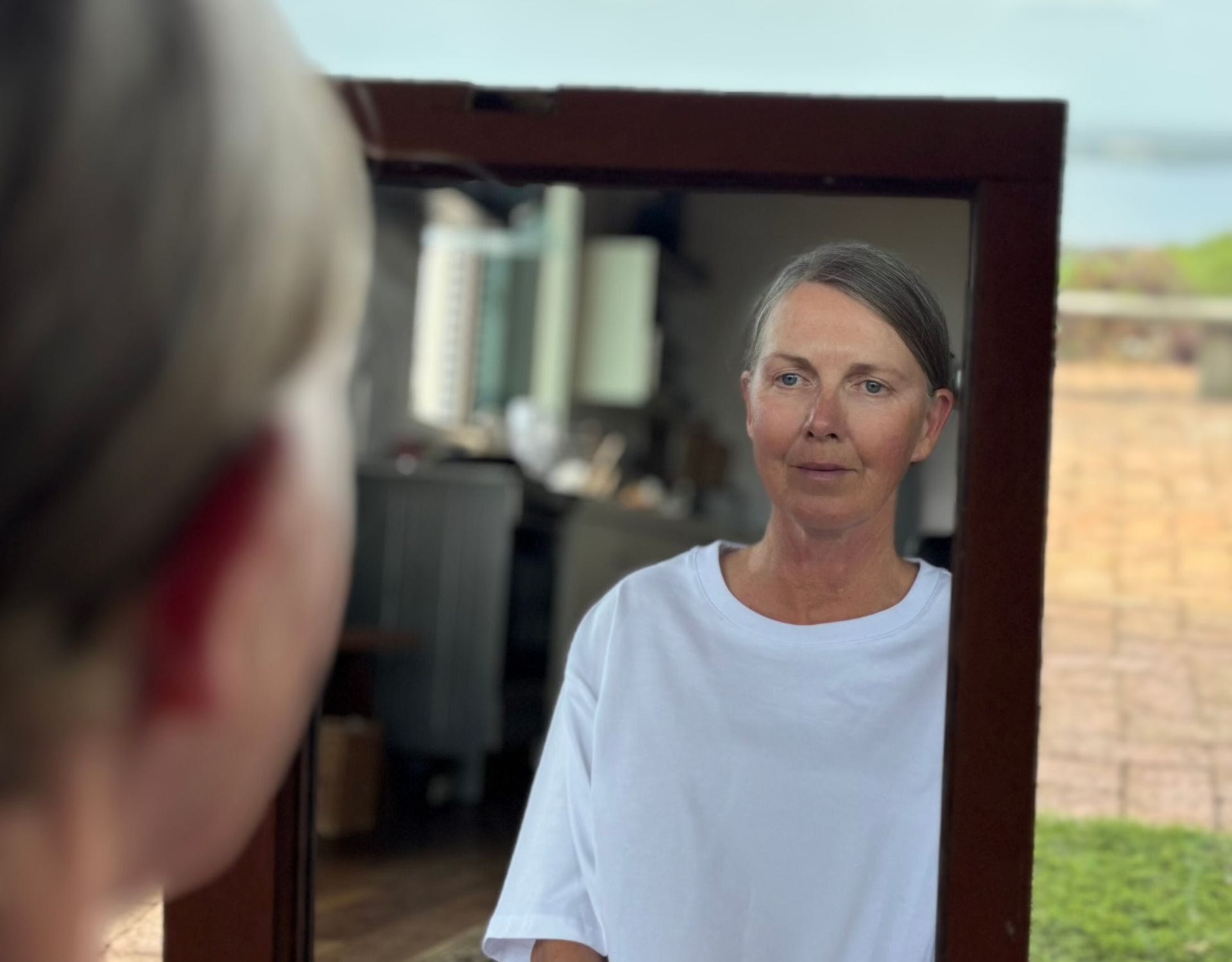
I turned sixty-one this year. I’m officially ancient. Not really. I certainly don’t feel old, but I’m finding it difficult to reconcile how I feel with how I look. Every time I look in the mirror (which is as little as possible these days), I want to apologise and say: “Sorry, wrong person,” and walk away.
Age snuck up on me slowly. Then all at once, altering my face and leaving behind lines that remind me of a life well lived. That’s just how it is. No one escapes it. We arrive, we grow, we spend time trying to be “someone” — and then we fade. We get older, people forget us, and then the inevitable happens.
Lately, I’ve started to look more like my mother did when she was my age, which is both comforting and a little unsettling. I feel comforted because she was a wonderful woman. But unsettled, because I remember thinking she was an old woman at sixty-one, and now here I am — and I don’t feel old at all.
I’m certainly not the gorgeous woman I once was, but that’s alright. Thanks to philosophy, I understand that our bodies are just vehicles; temporary rentals with no guarantees. We do our best to take care of them, but they’re not who we are.
This body is not who I am.
Still, the world responds just as you’d imagine. People pass by without a second glance, and teenagers barely register your presence. You begin to blend into the background — muted, beige, and irrelevant.
You begin to feel invisible. But being invisible is highly underrated. There’s a beautiful freedom in it. No one is watching, judging or expecting anything from you. You can simply observe life as it unfolds, no longer swept up in its endless performance. It’s like people-watching from a café. That delicious sense of detachment. But now, you don’t even need the café — you can witness the world from anywhere, unnoticed and free.
And that’s beautiful.
But it’s not really about how others see you. It’s about how you see yourself. The gap between how you feel inside and how you look outside is not a mistake; it’s an invitation to ask a deeper question: If this changing body isn’t me, then who am I?
The Philosophy of Aging
As we age, something interesting happens: our attachment to our identity begins to loosen. The things we once clung to — youth, attractiveness, relevance — start slipping through our fingers. Age slowly dismantles what was never truly “us” to begin with. It removes the costumes so we can finally meet the actor.
You start to notice that the person who feels hurt, flattered, embarrassed, proud, or insecure is also fading. Those emotional reactions belonged to the personality — a temporary bundle of preferences, fears, habits and self-images accumulated over decades. But beneath that bundle, there’s the ever-present witness that has been steady all along. A presence that doesn’t panic when your hair becomes unruly, or your waistline thickens. A presence that observes everything yet remains unaffected by anything.
This is who you really are — the constant awareness behind every experience. Oddly, getting older makes its existence more obvious. When you wake up feeling thirty inside but see someone over sixty in the mirror, the mismatch makes you wonder: “If I’m not the changing body, who am I?” That question turns you inward, toward the part of you that doesn’t belong to time at all.
If ‘The Elder Sage’ has benefited you in some way, and you would like to give something back, you can do so by subscribing or upgrading your free subscription.
Thank you for reading.
Till next time, be well,
Meredith — The Elder Sage
If you enjoyed this post, you might also enjoy:


Beautifully articulated. Your gaze reflects the peace that radiates out of your words!
Beautiful you ! Your words are always a balm. I’m 59 going through exactly the same thing.. accepting the face of my aunts and grandmother looking back at me … the thing I like most is going unnoticed in a crowd.. it’s freeing .. and of course letting go of self consciousness and recognising what it means to be conscious.